-
 [email protected]
-
 +86 15857619833
-
+86-18989628252
[email protected]
+86 15857619833
+86-18989628252

Grinding sits in a genuinely different spot in the manufacturing sequence than most other material removal processes. Turning, milling, drilling — these generally take metal off in fairly large quantities. Grinding does the opposite: it works in small, fine increments, and that difference in scale is really what shapes the final quality of a workpiece.
The role grinding plays diverges from other processes in a few real ways. Turning, milling, and drilling build shapes and features from raw stock. Grinding comes in afterward and refines those shapes — tighter tolerances, better surface finish. It's not really about creating the basic form; it's about perfecting whatever form is already there.
What grinding achieves is honestly hard to match through other means. Dimensional accuracy down to very fine tolerances becomes realistic. Surface finishes that would be impractical to chase with cutting tools show up routinely with grinding instead. Hard materials that give cutting tools real trouble grind effectively without much fuss.
Grinding hasn't lost its place despite everything else advancing around it, mostly because some requirements just can't be met through cutting alone. That combination — accuracy, finish, and the ability to handle tough materials — really has no equal among the other material removal processes out there.
Not every grinding job actually calls for precision equipment. Plenty of applications tolerate wider tolerances and rougher finishes just fine. What separates conventional grinding from precision grinding really comes down to the level of control and accuracy the job demands.
Certain tolerance requirements really do push toward precision equipment. Components that need to fit together with almost no clearance require genuinely accurate dimensions. Sealing surfaces have to match within tight limits. Moving parts need consistent clearances to function properly. These are exactly the applications where precision grinding earns its keep.
Surface finish expectations factor in here too. Some components need very smooth surfaces just to work as intended. Bearing surfaces want low roughness to cut down friction. Sealing surfaces need that smoothness to keep leaks from happening. Precision grinding delivers the surface quality these applications actually demand.
Some jobs simply need a level of control that standard grinding can't reach — not in dimensions, not in surface quality, not in either. Precision grinding equipment is really what closes that gap for demanding applications.
The material being ground shapes practically every part of the process. Different materials respond in their own ways to the abrasive action of the wheel, and those material properties end up dictating grinding parameters, wheel choice, and what kind of outcome to expect.
Hardness and toughness are two properties that tend to respond well to precision grinding. Hard materials that would chew through cutting tools grind cleanly instead. Tough materials that would tear apart under a cutting edge come out smooth under grinding. It's really one of grinding's core strengths.
That said, hardness and toughness shape the process in practical ways too. Harder materials need more grinding force and tend to generate more heat along the way. Tougher materials load up the grinding wheel faster. Parameters have to shift to account for whatever material is actually on the table.
Geometry plays a role as well. Complex shapes with tight corners sometimes need specialized grinding techniques to handle properly. Thin sections need careful control to avoid distortion creeping in. The workpiece's actual geometry really shapes how the whole process gets applied in practice.
Accuracy in grinding comes from several things lining up together. The machine needs real rigidity and stability. The wheel needs proper dressing. Process parameters need to be dialed in correctly. Each piece contributes to the final accuracy in its own way.
The basic mechanics behind accurate material removal are pretty straightforward. The wheel takes material off in very small increments, pass by pass. Each pass removes a controlled amount, and the accumulated effect across many passes is what produces the final dimension.
Machine control governs the depth and placement of every single pass. The machine moves the wheel relative to the workpiece with real precision, and every movement gets measured and controlled along the way. The final dimension really just reflects how accurate those movements were.
A handful of factors shape the final dimensions of the workpiece:
Accuracy really depends on both the machine and the process behind it. A precise machine run carelessly won't produce accurate parts. A less precise machine run carefully can still turn out acceptable results.
Surface quality describes the texture and finish left on the ground surface. Precision grinding turns out surfaces that stay smooth and consistent, and grinding parameters connect pretty directly to whatever finish comes out the other end.
Surface quality feeds into component performance in a few real ways. A smooth surface cuts down friction and wear. It seals better against fluids. It resists corrosion and fatigue more effectively too. The finish really does shape how well the part performs once it's in use.
The range of finishes precision grinding can hit spans from perfectly acceptable to genuinely fine. What you actually get depends on the parameters chosen, the wheel selected, and the material being worked. Finer finishes demand more careful control, and usually more time too.
| Application Area | What Precision Grinding Achieves |
|---|---|
| Automotive components | Critical dimensions and sealing surfaces |
| Aerospace parts | Tight tolerances and fatigue resistance |
| Medical devices | Smooth surfaces and biocompatible finishes |
| Tool and die making | Sharp edges and precise contours |
| Bearing manufacturing | Roundness and surface finish |
| Hydraulic components | Leak‑free sealing surfaces |
Surface quality matters for both function and appearance, and neither one really covers for the other. A component that performs well but looks rough might not pass inspection. One that looks polished but performs poorly will fail regardless. Precision grinding is really what covers both sides of that equation at once.
Some materials genuinely demand controlled grinding conditions, and what the material actually is really dictates how much control that process needs. Certain materials tolerate an aggressive grind just fine. Others need every process variable managed carefully, or things go wrong fast.
Hard, brittle, or heat‑sensitive materials tend to benefit most from that kind of control. Hard materials throw off real heat during grinding. Brittle ones can crack under too much force. Heat‑sensitive materials can shift their own properties if temperatures climb too far.
Controlled grinding handles heat and stress through a few practical measures. Coolant pulls heat away from the grinding zone as it's generated. A reduced depth of cut keeps applied force in check. The right wheel selection balances material removal against how much heat actually builds up. Each piece works together toward the same goal.
Control and material integrity really do connect directly here. Grind a material without adequate control, and damage tends to follow — surface cracking, residual stress, unwanted metallurgical changes. Proper control is really what keeps those problems from showing up in the first place.
Some materials simply can't be ground reliably without that kind of precision. A High Precision Grinding Machine provides exactly the control demanding materials need. Managing those process variables tightly is often what separates a successful grind from a failed one.
A handful of variables shape how a precision grinding operation turns out, and each one needs real management to get consistent results. The way these variables interact adds a layer of complexity that's easy to underestimate.
Wheel speed drives both material removal rate and surface finish. Push speeds higher and finishes tend to get finer, though heat generation climbs along with it. Drop speeds lower and material comes off more slowly, but with less heat built up. Matching wheel speed to the material and the desired outcome is really the whole game.
Feed rate governs how fast the wheel travels across the workpiece. Faster feeds clear material quicker but can leave a rougher finish behind. Slower feeds produce cleaner finishes at the cost of time. Getting that balance right between productivity and quality takes real judgment.
Depth of cut decides how much material comes off in each pass. Deeper cuts move faster but generate more heat and force along with them. Shallower cuts ease off both, but demand more passes to get there. Either way, depth of cut touches both productivity and final quality.
Coolant application shapes temperature control and wheel life together. Enough coolant pulls heat out of the grinding zone effectively. Proper delivery also washes away swarf before it loads up the wheel. Choosing the right coolant type and flow really has to match the specific operation.
A few key variables really need tight control:
Machine design really sets the ceiling on what precision and control are even possible. A well‑built High Precision Grinding Machine brings the stability and accuracy demanding work actually needs, and the design features behind that are pretty concrete and measurable.
Rigidity shapes precision in a very direct way. A rigid machine resists deflecting under grinding forces, which keeps the relative position between wheel and workpiece stable throughout the operation. That stability is really what supports accurate material removal.
Spindle and drive systems play their own part in control. The spindle needs to run true with minimal runout. The drive system needs to deliver consistent power at whatever speed the job calls for. Both spindle and drive performance feed directly into accuracy and surface finish alike.
Machine design and process capability really can't be separated here. A machine built with precision grinding in mind carries the features controlled work actually requires, and the design decisions made early on shape what that machine can ultimately achieve.
Verification confirms whether a grinding operation actually hit its targets. Inspection measures dimensional accuracy and surface quality, and that whole process feeds back into keeping the grinding process under control going forward.
Dimensional measurement and surface assessment are the two main techniques used to confirm results. Dimensions get checked against spec using the right measuring equipment. Surface finish gets evaluated with instruments built to measure roughness and texture.
Measurement verifies dimensional accuracy by comparing what actually came off the machine against what was required. Any deviation points straight to a problem somewhere in the grinding process, and those measurement results are really what guide the adjustments that follow.
Surface assessment methods evaluate finish quality on their own terms. Roughness gets measured and checked against requirements. Defects like cracks or burns get caught through visual or microscopic inspection.
Verification really is essential here, because it's the only source of real feedback. Without it, there's no way to actually know whether a grinding operation hit its mark. That feedback loop between verification and adjustment is what keeps quality consistent over time.
Precision grinding typically holds a specific spot in the production sequence — usually landing after rough machining and before final assembly. That position really reflects both what grinding can do and where its limits sit.
Where grinding falls in the sequence connects directly to what it actually achieves. Grinding refines dimensions and finishes that earlier processes already roughed out. Those earlier steps handle the bulk material removal, leaving grinding to deliver the final accuracy on top.
Grinding interacts with the steps around it in genuinely practical ways. Upstream processes need to leave enough material behind for grinding to work with. Downstream processes need to accommodate whatever dimensions and finish grinding actually produces. That interface between steps really demands careful coordination to avoid mismatches.
Grinding often ends up as the last operation before assembly, which means the dimensions and finish it leaves behind are exactly what shows up in the finished part. The quality of that grinding step really does carry straight through into the quality of the assembled product.
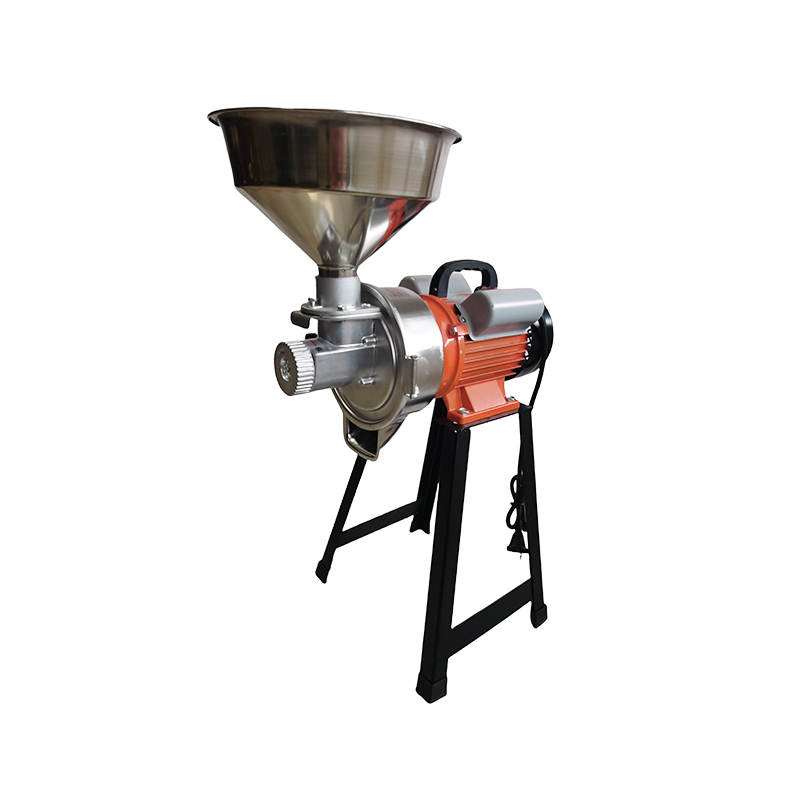
For work involving stainless steel specifically, a Stainless Steel Grain Grinder often gets selected to handle the material's particular challenges. These machines are built around stainless steel's hardness and its tendency to work‑harden during processing, which standard equipment doesn't always account for well.

Asynchronous Motor Manufacturer



 English
 中文简体
中文简体