-
 [email protected]
-
 +86 15857619833
-
+86-18989628252
[email protected]
+86 15857619833
+86-18989628252

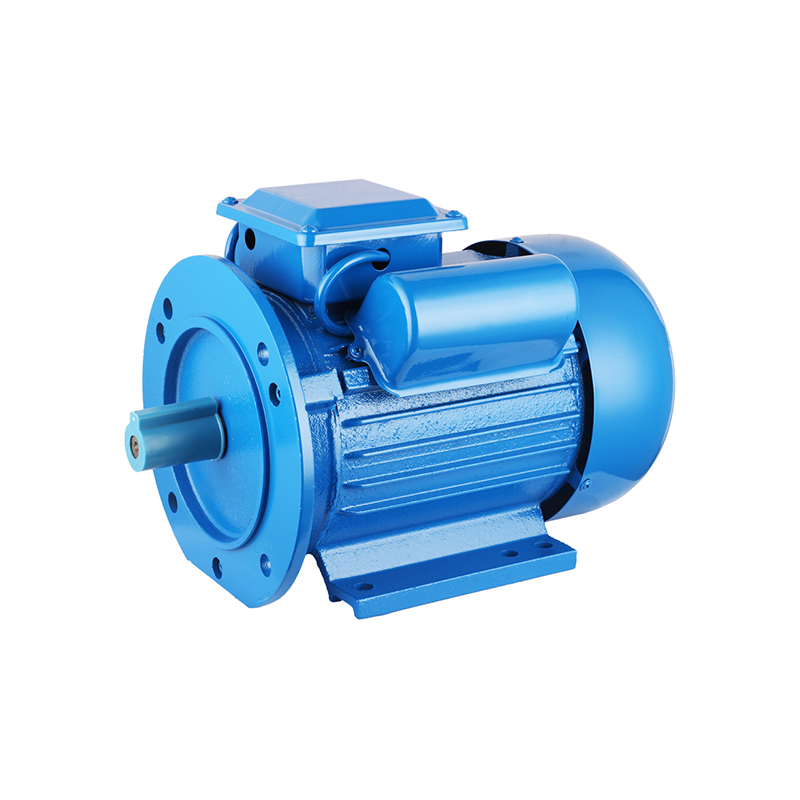
Single‑phase capacitor start induction motors are commonly used in applications requiring reliable starting torque from a single‑phase power supply. Unlike three‑phase motors, which naturally generate a rotating magnetic field, a single‑phase induction motor cannot start on its own. To address this, a start capacitor is connected in series with an auxiliary winding to create a phase difference, producing a rotating magnetic field at startup.
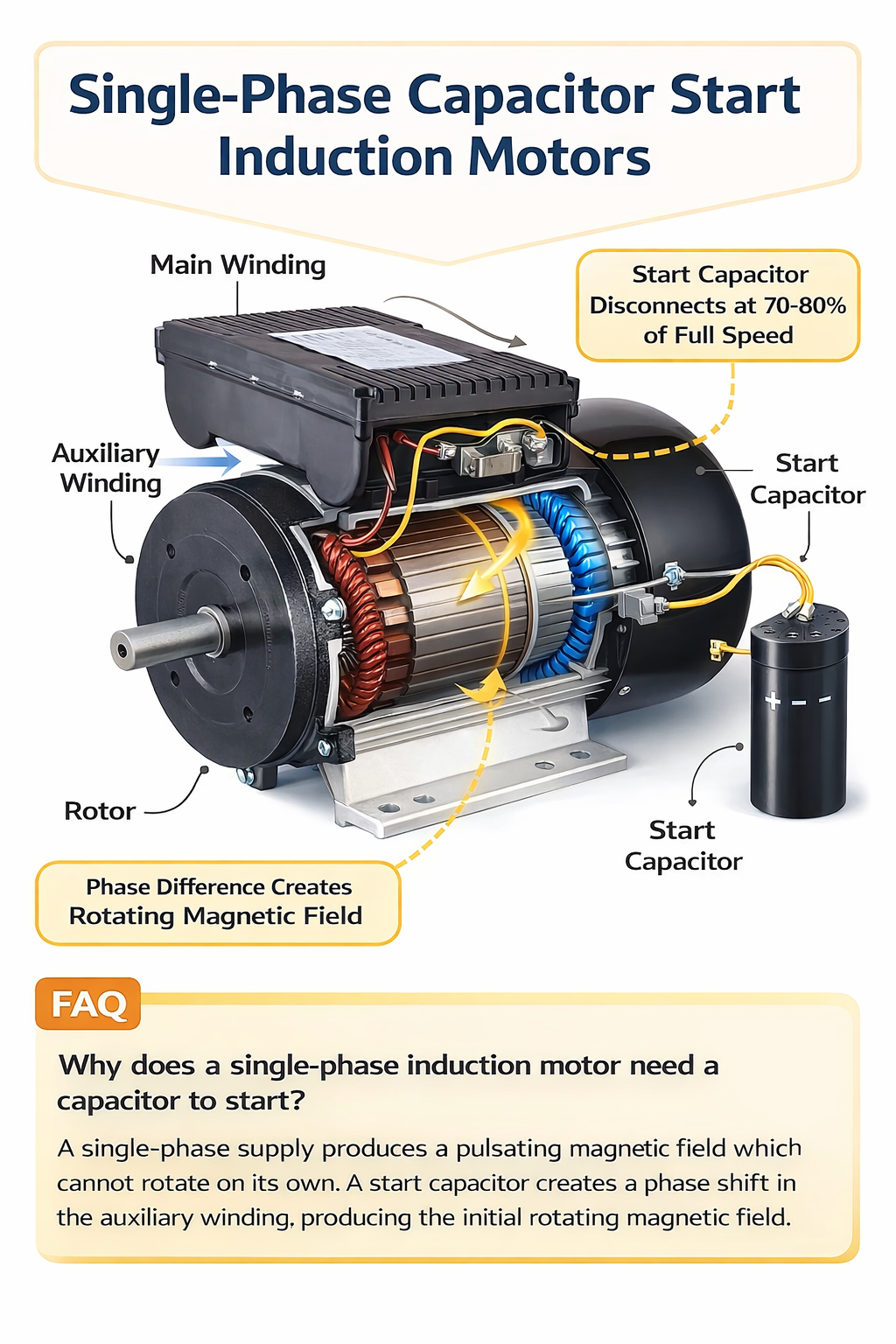
The main components of this motor include the main winding, auxiliary winding, and the start capacitor. When the motor is powered, the capacitor shifts the current in the auxiliary winding relative to the main winding. This phase difference generates the initial torque needed to rotate the rotor. Once the motor reaches a certain speed, typically around 70 to 80 percent of full speed, a centrifugal switch disconnects the start capacitor and auxiliary winding, allowing the motor to continue running on the main winding alone.
Capacitor sizing has a significant impact on motor performance. Start capacitors are designed to provide high capacitance, supplying strong initial torque. These capacitors are intended for brief periods of operation during startup. Some motors also use a run capacitor, which remains in the circuit during operation to improve torque smoothness, efficiency, and power factor. The combination of start and run capacitors helps maintain stable operation and reduces vibration compared with motors that only have a start capacitor.
Despite the advantages, single‑phase induction motors generally have lower efficiency than three‑phase motors. The rotating magnetic field generated by the combination of the main and auxiliary windings is not as smooth as a true three‑phase system. This can lead to minor torque fluctuations and increased mechanical vibration. Proper capacitor selection and periodic maintenance are important for reliable long-term performance.
In practice, common issues include start capacitor failure or malfunction of the centrifugal switch. A failing capacitor can result in weak or no starting torque, with the motor humming without accelerating. Centrifugal switches can also wear out, causing delayed disconnection or failure to remove the start capacitor. Regular inspection of these components can prevent common startup problems and maintain motor longevity.
Single-phase capacitor start induction motors are widely used where single-phase power is available, including pumps, compressors, fans, and small machinery. Their design offers a cost-effective solution for applications where a high starting torque is needed but three-phase power is not accessible.
FAQ
Q: Why does a single-phase induction motor need a capacitor to start?
A single-phase supply produces a pulsating magnetic field, which cannot rotate on its own. A start capacitor creates a phase shift in the auxiliary winding, producing the initial rotating magnetic field.
Q: What is the purpose of the centrifugal switch?
The centrifugal switch disconnects the start capacitor and auxiliary winding once the motor reaches sufficient speed to avoid unnecessary energy loss and prevent capacitor damage.
Q: Can start capacitors stay in the circuit during normal operation?
No. Start capacitors are only designed for short-term use during startup. Continuous operation can reduce efficiency and damage the capacitor.
Q: How can a failing start capacitor be identified?
A failing capacitor often causes weak startup, humming without rotation, or overheating during startup. Testing with a capacitance meter can confirm its condition.
Q: Are these motors suitable for high-efficiency applications?
Single-phase capacitor start motors are suitable for areas with single-phase power, but three-phase motors generally provide higher efficiency and smoother operation where three-phase power is available.

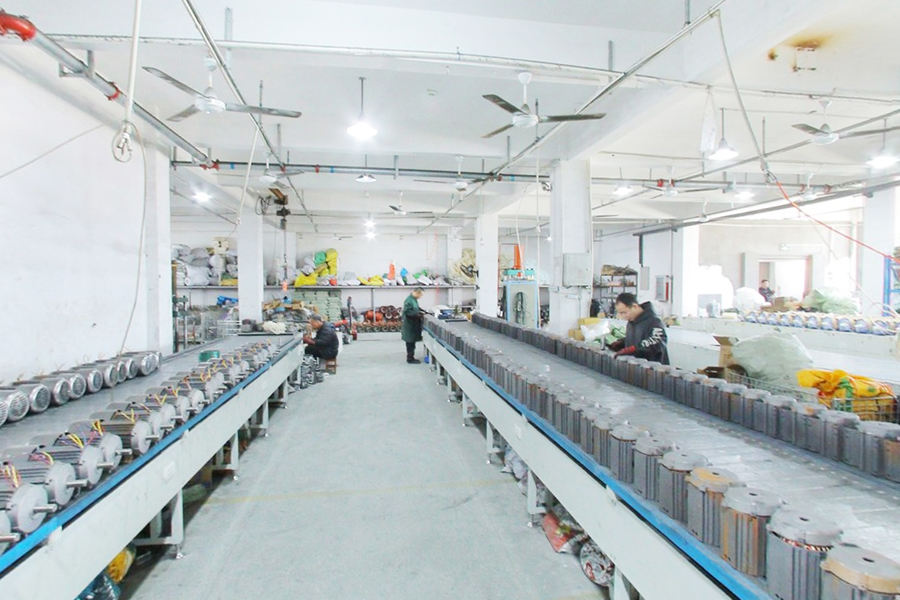
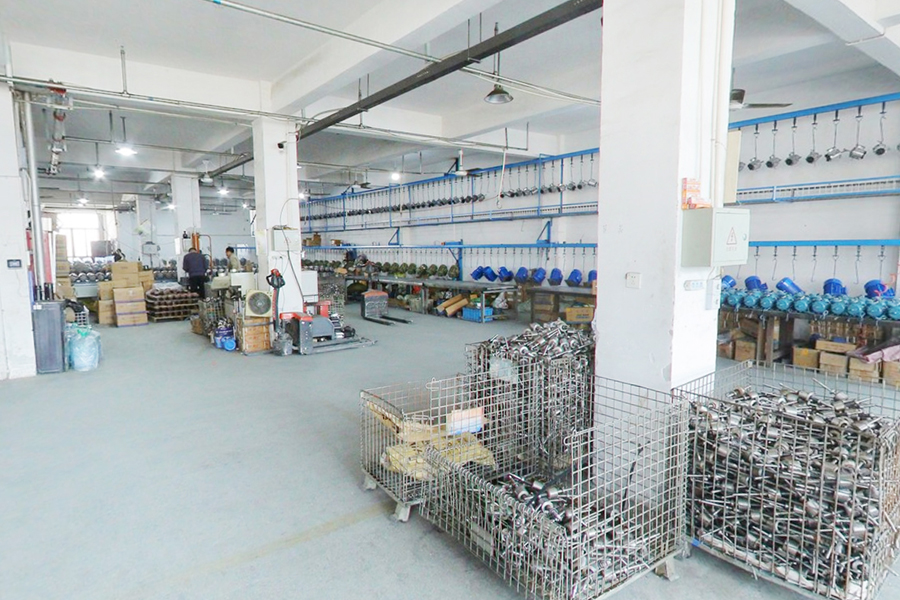
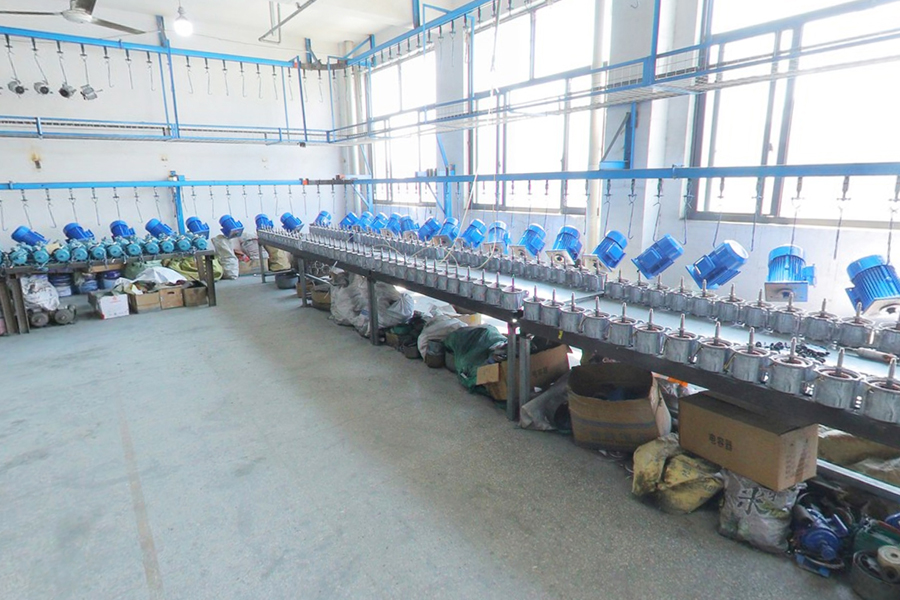
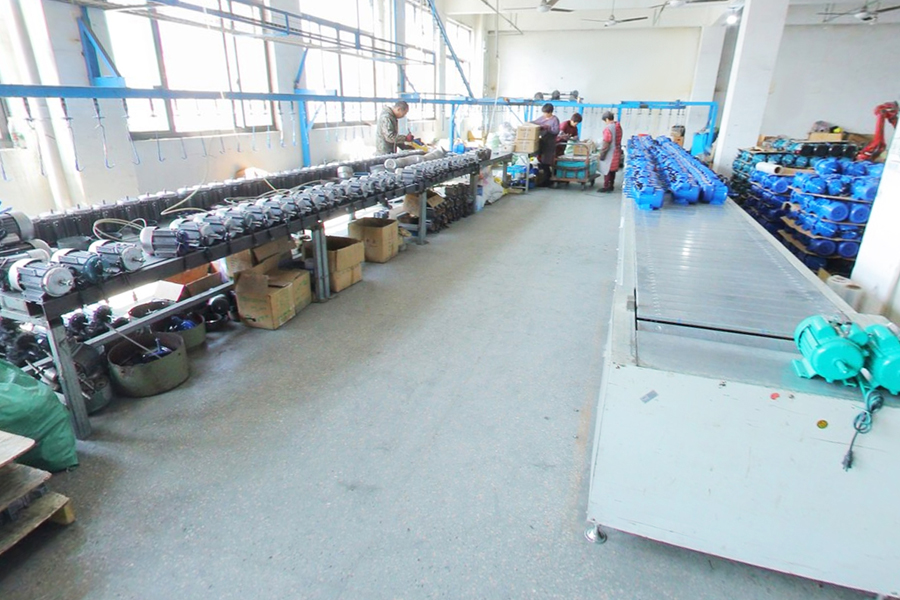


Asynchronous Motor Manufacturer



 English
 中文简体
中文简体