-
 [email protected]
-
 +86 15857619833
-
+86-18989628252
[email protected]
+86 15857619833
+86-18989628252

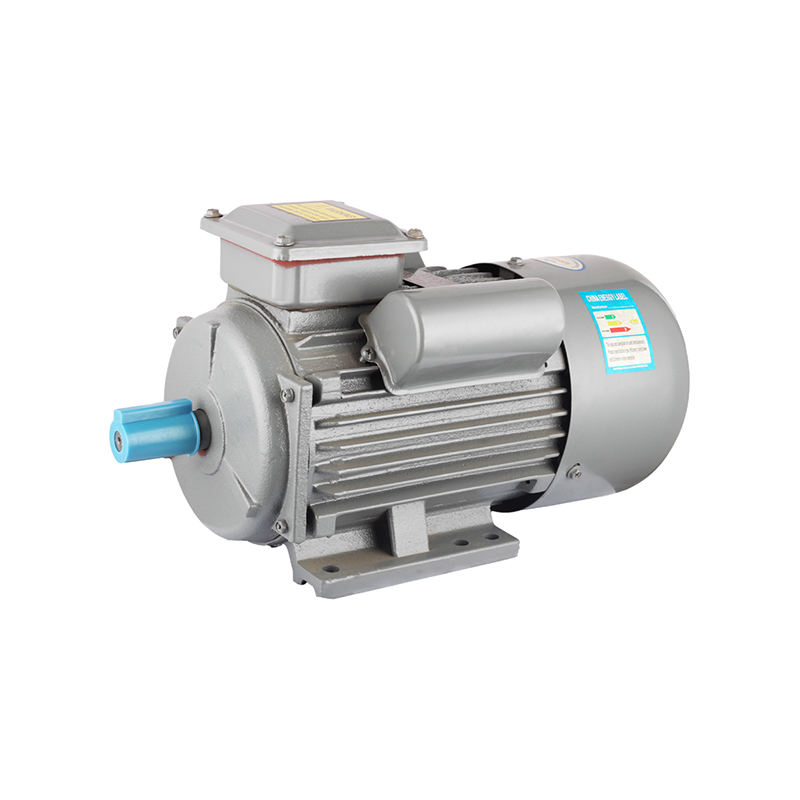
A single-phase capacitor start motor uses a capacitor wired in series with a starting winding to create a phase shift between two sets of windings. That shift produces a rotating magnetic field strong enough to get the rotor moving from a complete standstill. Once the motor reaches a certain speed, a centrifugal switch or an electronic relay disconnects the starting capacitor and its winding, and the motor continues on its main winding alone.
This arrangement exists because a plain single-phase motor, without any phase-shifting method, produces very little torque at zero speed. Some loads do not need that extra push. Others need it badly. The practical question for anyone picking a motor is fairly simple: does the equipment need a strong shove to get moving, or does it just need to spin smoothly once it is already turning?
Torque at startup is not just an abstract number on a datasheet. It decides whether a motor can move a loaded compressor piston, overcome the static friction of a pump impeller, or handle the inertia of a heavy rotating assembly before the load begins to turn. If starting torque is too low for the job, the motor may struggle to accelerate, overheat, or trip a breaker when starting under load.
Different equipment types place very different demands on a motor during the first stage of operation.
| Load Type | Starting Resistance | Typical Behavior at Standstill |
|---|---|---|
| Reciprocating compressor | Significant | Piston movement may need to overcome pressure and mechanical resistance |
| Centrifugal pump, primed | Moderate | Resistance can come from the fluid system and rotating assembly |
| Belt-driven fan | Low to moderate | Starting demand depends on belt tension and fan inertia |
| Conveyor with a loaded belt | Significant | Static friction and the material load affect initial movement |
| Small workshop tool such as a drill press | Minimal | Starting resistance is generally limited before the tool engages its working load |
This is a general guide rather than a strict rule, since real-world friction, fluid viscosity, mechanical linkages, and loading conditions can shift a machine from one category to another.
Reciprocating compressors are a familiar example of a load that can resist movement when it is asked to start, particularly when the compressor stops with pressure remaining in the system. The starting torque provided by a capacitor start arrangement can help the compressor overcome this initial resistance.
This is one reason this motor design can be found in various compressor applications and certain refrigeration equipment. The actual motor choice still depends on the compressor construction, starting condition, operating cycle, and electrical supply.
Pumps can also place a noticeable mechanical demand on a motor during startup. A water column, pump construction, fluid conditions, and connected piping can all influence how much resistance the motor encounters when rotation begins.
In agricultural settings, where a pump may remain idle for extended periods before starting again, the startup condition is worth considering during motor selection. A suitable capacitor start design can be considered when the equipment requires additional starting assistance from a single-phase supply.
Table saws, garage air compressors, small grinders, and similar workshop machines can use capacitor start motors when their mechanical load calls for more starting assistance than a simpler single-phase arrangement can provide.
For a workshop operating with single-phase power rather than a three-phase supply, this design can provide a practical option for equipment that needs attention during startup. The final choice should still be based on the machine's actual load and operating conditions.
Certain blowers, compressors, and other components used in heating and cooling equipment may start against mechanical resistance. The conditions vary between systems, so the motor needs to be matched with the particular equipment rather than selected from the application name alone.
Where a single-phase supply is used and the equipment requires additional starting assistance, a capacitor start design can be considered as part of the overall motor selection.
It would not be accurate to suggest that this motor type fits every application. Several situations may call for a different single-phase design instead.
Choosing a motor type often comes down to considering starting torque alongside the mechanical demands of the load, installation conditions, operating cycle, and maintenance requirements.
| Motor Type | Starting Torque | Starting Components | Common Use Case |
|---|---|---|---|
| Capacitor start | Relatively strong | Starting capacitor with a switching method | Compressors, pumps, workshop equipment |
| Capacitor start, capacitor run | Strong starting response with capacitor-assisted running | Starting and running capacitors with a switching arrangement | Equipment requiring different starting and running characteristics |
| Permanent split capacitor | Moderate | Running capacitor remains in the circuit | Fans, blowers, and some pump applications |
| Shaded-pole | Light | No separate starting capacitor | Small fans and light-duty equipment |
| Split-phase without capacitor | Light to moderate | Starting winding with a switching method | Light loads without demanding starting conditions |
A capacitor start motor introduces additional starting components compared with some simpler motor designs. The starting capacitor and centrifugal switch, or an electronic switching equivalent, deserve attention when planning maintenance.
Deciding on a capacitor start motor comes down to a few straightforward questions about the application.
Does the load resist movement at standstill? Is the equipment running on single-phase power without access to a three-phase supply? Does the machine have a starting cycle that calls for additional starting assistance? Is the equipment operating within a reasonable duty cycle?
If the answers point in that direction, a capacitor start motor may be worth considering. The selection should still take the complete machine into account rather than relying on one characteristic.
If the load is light, starting resistance is limited, or the equipment cycles on and off very frequently, another single-phase motor design may be worth reviewing. Simpler arrangements can sometimes suit applications where the starting demand is relatively modest.
It generally operates from the same type of single-phase electrical supply used by other single-phase motors, but its internal starting circuit includes a starting winding and capacitor. The exact wiring arrangement depends on the motor design and should follow the manufacturer's wiring instructions.
Yes. After the starting capacitor and auxiliary winding are disconnected from the starting circuit, the motor continues running through its main winding under normal operating conditions.
It can be considered for a compressor that starts against mechanical resistance while operating from a single-phase supply. The final selection should take the compressor design, starting condition, duty cycle, electrical supply, and mounting requirements into account.
A Single-Phase Capacitor Start Motor makes practical sense when the starting condition of the driven equipment deserves particular attention. Pumps, compressors, conveyors, workshop machinery, agricultural equipment, and selected HVAC applications can have different requirements during the first stage of operation.
The key is to look beyond the motor itself. Starting resistance, load inertia, electrical supply, operating cycle, transmission method, installation environment, and maintenance requirements all contribute to the selection.
When these factors are considered together, it becomes easier to determine whether a capacitor start design fits the machine or whether another motor arrangement would be more appropriate.

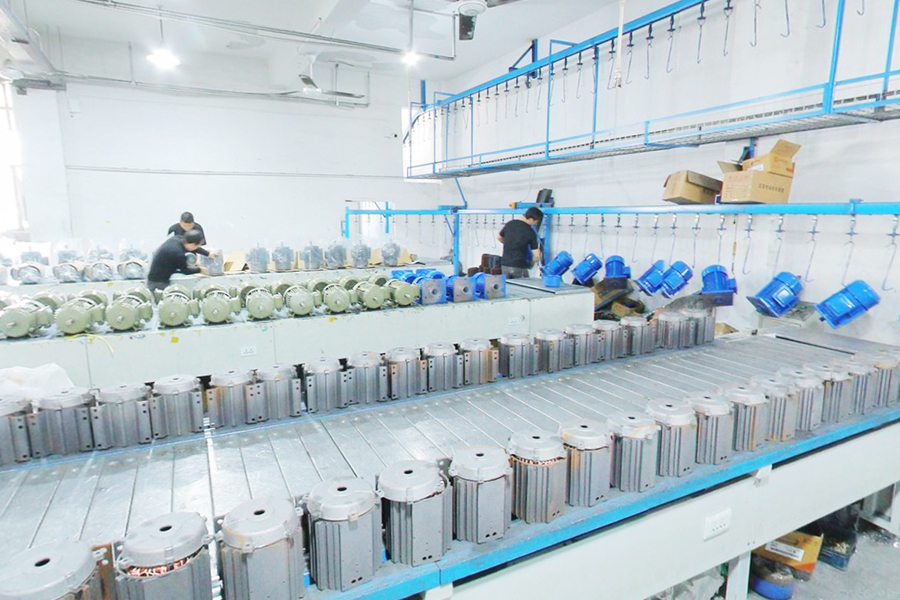
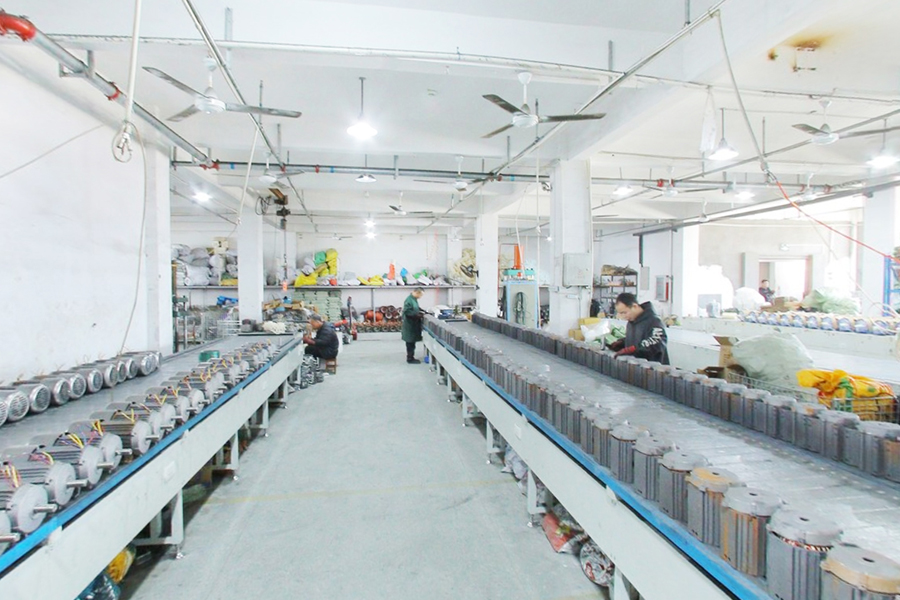


Asynchronous Motor Manufacturer



 English
 中文简体