-
 [email protected]
-
 +86 15857619833
-
+86-18989628252
[email protected]
+86 15857619833
+86-18989628252

Open the cover of a single-phase induction motor and you will often find a small cylinder or box attached to it. That part is a capacitor. Some motors use one for a brief push at startup. Others use one that stays active the whole time. The two look alike, but they do very different jobs.
A three-phase supply produces a rotating magnetic field on its own. A single-phase supply does not. It creates a field that pulses back and forth in one line, and that kind of field cannot get the rotor moving from a standstill.
To solve this, designers add a second winding, often called the auxiliary or start winding. A capacitor is wired in series with that winding. It shifts the timing of the current, so the two windings are out of step with each other. That time gap produces a field that behaves as if it were rotating, and the rotor begins to turn.
In short:
Think of it as a short burst of effort. A starting capacitor is built to deliver a strong twisting force while the shaft is still at rest or turning slowly. Once the motor nears its normal speed, the capacitor steps out of the circuit.
A switch handles the exit. Depending on the design, this may be:
If the capacitor stayed connected too long, it could overheat. That is because this type is made for brief duty only.
Starting capacitors suit equipment that is hard to get moving, such as:
These machines face resistance from the moment they switch on, so they need a firm push before they settle into a steady turn.
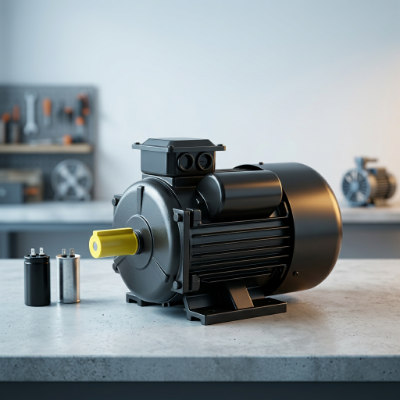
A running capacitor plays a quieter role. It remains connected to the auxiliary winding while the motor operates. Instead of delivering a one-time push, it keeps the magnetic field smooth and balanced, which helps the motor work more steadily.
Because it improves how the motor uses power while running. With a properly matched running unit, you can expect:
Running capacitors are made for continuous duty. Their construction differs from starting types, so they handle long hours without trouble.
You will find running capacitors in equipment that works for long stretches under steady loads:
| Feature | Starting Capacitor | Running Capacitor |
|---|---|---|
| Main purpose | Helps the motor begin turning | Keeps operation smooth once running |
| Time in circuit | Brief, only at startup | Continuous while powered |
| Duty type | Short-term | Long-term |
| Typical effect | Stronger twisting force at rest | Better balance and efficiency |
| Common location | Compressors, loaded pumps | Fans, blowers, light appliances |
| Needs a switch? | Yes, to disconnect it | No, stays wired in |
It may be tempting to grab whichever unit is on hand, but this is a risky shortcut.
Each type is matched to the winding design and the way the machine is used. When a replacement is needed, follow what the motor's nameplate or the manufacturer's documents call for.
Some single-phase motors combine the two ideas. These are commonly called capacitor-start, capacitor-run motors. They carry:
This pairing suits machines that are difficult to start yet must run for long periods, such as larger pumps or workshop tools. It blends strong starting behavior with steady, efficient operation.
Other designs you may come across:
You do not need special tools for a visual check. Look for these clues, always with the power fully off.
Capacitors age. Heat, vibration, and years of use gradually wear them down. Watch for these signs:
If you notice any of these, have the unit inspected by a qualified technician. A worn capacitor is a common cause, but other faults can look similar, including bearing wear and winding problems.
A capacitor can hold an electrical charge even after the power is switched off. This is a real hazard, so treat it with respect.
Safety rules differ by region, so local electrical codes should guide any repair work.
Selecting a new part is less about guesswork and more about matching information. Keep these points in mind:
If the motor itself is aging or unsuited to the workload, it may be worth exploring a replacement motor designed for your application. Manufacturers such as Guanfeng Motor offer single-phase asynchronous motors for a range of uses, and their product pages can help you understand the available configurations.
No. One supports startup for a short time. The other supports steady operation for as long as the motor is on.
Some may turn if given a push, but they will usually perform poorly, overheat, or fail to start on their own. It is not a safe practice.
Service life depends on heat, load, usage patterns, and build quality. There is no single answer, and regular inspection is a sensible habit.
A weak running capacitor is a frequent cause, though a stuck bearing or damaged winding can produce the same symptom.
No. Some designs, such as shaded-pole or split-phase types, use other methods to create starting torque.
The difference comes down to timing and duty:
Knowing which one your machine relies on makes troubleshooting simpler, helps you buy the correct replacement, and keeps your equipment working as intended. When in doubt, check the nameplate, follow the manufacturer's guidance, and bring in a qualified professional for anything involving live circuits.

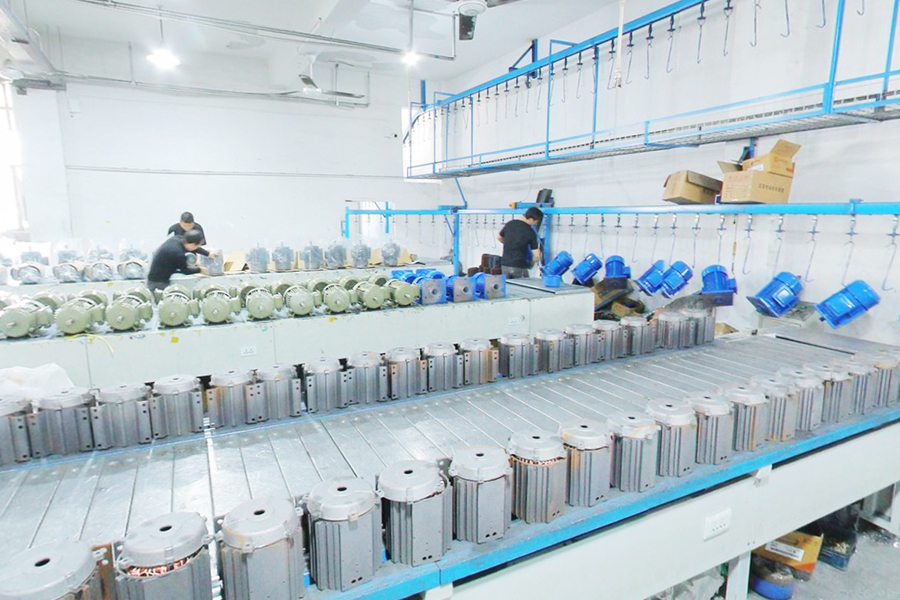


Asynchronous Motor Manufacturer



 English
 中文简体